

Practice Management Philanthropic Planning Retirement Planning Insights
FinServe Ambassador Charts Career Evolution Through Specialization
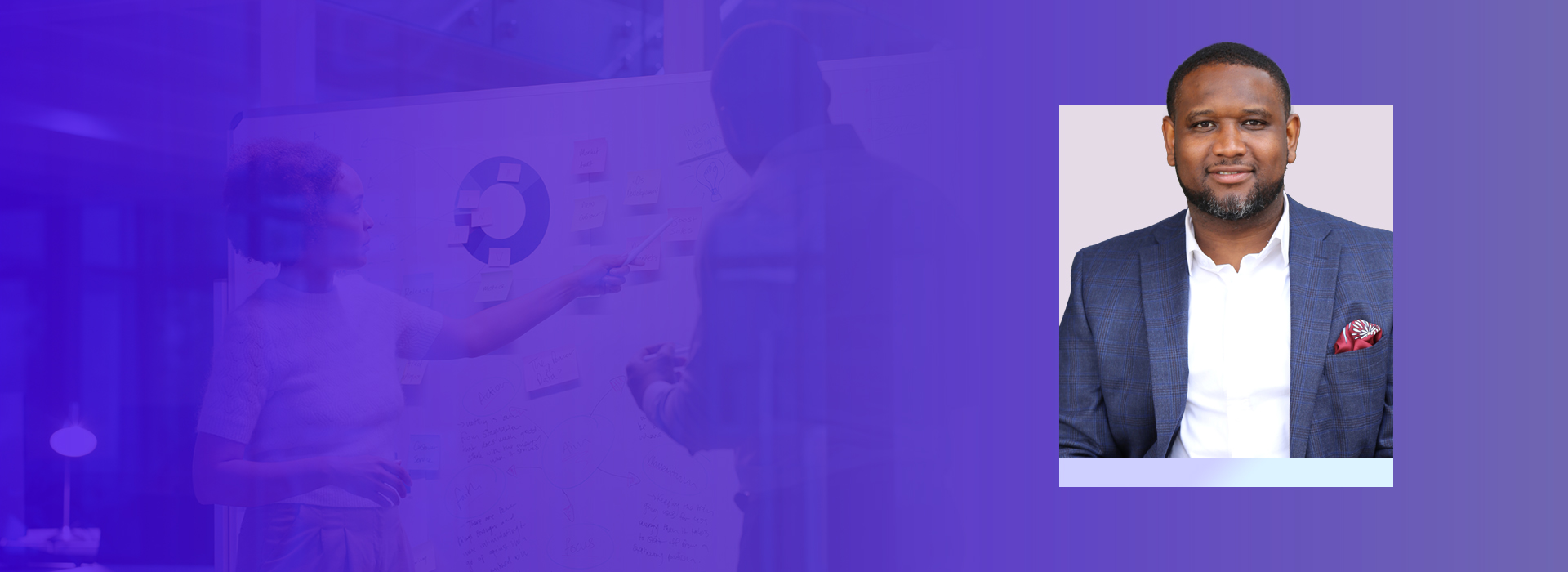
Tudor says he entered the financial services profession via banking in 2008 during a volatile and chaotic time for the industry. Despite this, he says he found great satisfaction in his work in leadership roles – running several bank branches around Cincinnati, Ohio – and especially in areas involving lending. That was where he first started to sense the industry might have blind spots and think about how he wanted to address them.
“I really enjoyed helping people buy houses and start small businesses, but I saw gaps in knowledge and access, especially when it came to investment management,” he said. “The bank often had a minimum level of assets they would service, and I often saw more resources being afforded to affluent communities. I knew I wanted to focus on those who had been historically excluded.”
Tudor eventually transitioned into a role with Northwestern Mutual and spent several years at the company becoming a licensed advisor and directly working with clients. From those interactions, he continued to refine his sense of who he was as a professional and who he wanted to serve.
“Most people, especially those from historically excluded communities, need more education in and access to financial services and are looking for deeper advice than just receiving products,” he said. “I’ve always felt we should be building in systems to protect and educate these groups.”
In 2020, amid the COVID-19 pandemic, Tudor finally decided he wanted to start his own firm and launched Alchemist Wealth – with a focus on fee-only planning and serving women and other historically excluded communities – with his brother. Four years later, he merged the successful practice into Zenith Wealth Partners, where he continues to work as an advisor in a variety of planning fields, from investment portfolios to retirement and philanthropic planning. It’s all in service, he says, of his mission to help his clients align their money with their values.
The Role of Retirement Planning
While at Northwestern, Tudor availed himself of the company’s connection to The College to earn multiple designations and certifications: first through the CFP® Certification Education Program to get a strong financial planning foundation, and later through the Retirement Income Certified Professional® (RICP®) Program for the specialization he was seeking in retirement preparation and planning.
“The first time a client came to me and asked me questions about retirement I couldn’t answer, I knew I had to get more knowledge,” he said. “The RICP® is powerful because it impresses upon you that accumulation planning and retirement income planning are two very different things. When I was at Northwestern, we would answer questions about retirement planning with material from College thought leaders like Michael Finke, PhD, CFP® and Wade Pfau, PhD, CFA, RICP®. Their advice on using tools like annuities, home equity, and other income streams to stabilize retirement income may not be popular in some circles, but they’re mathematically proven to be better solutions.”
“[The RICP® Program]’s advice on using tools like annuities, home equity, and other income streams to stabilize retirement income may not be popular in some circles, but they’re mathematically proven to be better solutions.”
Tudor says thanks to the RICP®, he is now well-versed in retirement planning concepts and can simplify them enough for his clients to understand. He also says he sees a growing need for this specialized knowledge as America continues to age.
“The industry to me is still five to 10 years behind what’s necessary in retirement income planning, and it’s exciting to see The College continue to be out in front of the latest ideas and blaze the trail for doing things the right way,” he said.
Investing for Impact
In addition to his focus on retirement planning, Tudor says he’s always been interested in the technical side of planning and the potential of money in general to benefit society. Because of this, he enrolled in the Chartered Advisor in Philanthropy® (CAP®) Program at The College to gain more specific knowledge about how to use investment strategies to help his clients live their values.
“We often ask clients about their goals for impact: whether they’re broad or specific, for family, community, globally, or causes they support,” he said. “Clients constantly bring these subjects up, and I don’t know how I would be an advisor without being able to have those conversations. I believe eventually those kinds of conversations will be table stakes for the industry, and everyone will need to know how to talk about charitable giving with clients and organizations.”
While he loves working directly with clients, Tudor says it’s the institutional side of giving that he’s fallen in love with thanks to the CAP® Program.
“It’s about how you use money and make it work for what you believe in the real world, not just on your spreadsheet,” he said. “That kind of mission-aligned investing, where organizations use their capital to benefit society, is exactly where I want to be. The CAP® Program’s donor strategies were helpful, but its full course dedicated to working with nonprofits has allowed me to sit on board committees and lead conversations about aligning investment portfolios with an organization’s mission. I think that’s a serious gap in the market to be addressed.”
“[The CAP® Program] has allowed me to sit on board committees and lead conversations about aligning investment portfolios with an organization’s mission. I think that’s a serious gap in the market to be addressed.”
Finding Community and Purpose
After being inaugurated into The College community as a recipient of the NextGen Financial Services Professional Award, Tudor says he has been consistently impressed by what The College is able to do for financial professionals – especially in its events like the annual Conference of African American Financial Professionals (CAAFP).
“CAAFP feels like a homecoming every year for me,” he said. “It’s my one opportunity to see and reconnect with a lot of people I know from the industry, and the workshop and keynote sessions are consistently incredible. It’s a safe bet for me to invite a new advisor to CAAFP. There aren’t many places Black professionals in financial services can go and see mostly people who look like them, and the level of excellence in the execution of the event is always impressive.”
“It’s a safe bet for me to invite a new advisor to CAAFP. There aren’t many places Black professionals in financial services can go and see mostly people who look like them.”
Tudor says he’ll be present at this year’s CAAFP, to be held August 12-14 in Atlanta, Georgia. In the meantime, he advises young professionals in the field to be open to challenging themselves and thinking intentionally about their career path.
“Go to places that stretch you and be mindful of how you feel when you’re doing things,” he said. “This field affords you 40 years to build a career and have an impact, so thinking long-term is key. I love working with personal clients and enjoy financial planning in general, but I really live for doing organizational and institutional planning. Fill your day with things you enjoy doing, and success will come.”
Ethics In Financial Services Insights
Insights and Highlights Self-Regulatory Approaches to AI Governance

The panelists emphasized that good model development practices, irrespective of regulatory requirements, lead to better performance and predictability in tech investments. Companies implementing self-governance ahead of regulations often perform better by integrating risk management with economic considerations. The NIST framework, “Towards a Standard for Identifying and Managing Bias in Artificial Intelligence,” addresses both technical and social impacts of AI, ensuring comprehensive governance.
Mandated by Congress in 2021, NIST developed a risk-based framework for managing AI models and practices. This flexible resource aids organizations in governing, mapping, measuring, and managing bias in AI. By focusing on governance, policies, procedures, and organizational culture, organizations can take a comprehensive approach to this challenge. By taking a proactive approach to governance, the aim is to help organizations promote trustworthy AI practices, including model validity, reliability, security, resilience, explainability, accountability, transparency, privacy, fairness, and bias mitigation.
The panel also discussed the relationship between federal and state initiatives and the role of self-regulation in AI governance. One panelist mentioned the AI Executive Order's contribution to defining real risks and the ongoing work on an AI risk management profile for generative AI. Another stressed the need for clear documentation and repeatable practices to provide assurance to partners.
The conversation also covered the challenges of accountability within organizations, highlighting the need for a cultural shift towards responsible AI use. The panel emphasized the importance of integrating AI risk management with broader enterprise risk management frameworks and adopting a shared responsibility model with third-party vendors.
Looking forward, one panelist predicted that AI risk management would become a distinct job category, with an increased focus on the societal impacts of AI. Another anticipated a progressive impact on software quality control driven by AI, leading to more regulated software development practices.
In summary, the panel highlighted that given the evolving regulatory landscape there is a need for clear and transparent AI governance practices, as well as the importance of interdisciplinary collaboration and cultural shifts towards responsible AI use.
To learn more about AI in financial services, you can explore further with research from the Center for Ethics in Financial Services.
EdD, MPAS®, BS, MS PFP, MS FA, MLS-Legal Studies, MLS-Taxation, CFP®, ChFC®, AAMS™

PhD, CPA, PFS, CTP, ChFC®, CLU®, AEP®
Practice Management Insights
Marketing to Your Ideal Client

Growing your business is no easy task—but we can help! Our new practice management workbook is here to instruct you on the crucial methods every advisor needs to know as they seek to grow their practice.
Learn more about determining what your ideal client looks like and the services you offer them that set you apart from the competition. Prioritizing your client relationships not only helps you position yourself to provide your client with the best advice possible, but it will also keep your clients satisfied.
Increase your knowledge and take the steps to propel your business forward with this customizable workbook.
About The College Podcasts
Shares: The Future of Financial Advice
In this episode of our Shares podcast, host Jared Trexler speaks with Derek Notman, CFP®, founder and CEO of fintech company Couplr.AI. Couplr recently announced a partnership with The College to offer College alumni free access to its platform, which endeavors to match advisors to their ideal clients. Trexler and Notman discuss their respective visions for where the profession is headed and the role of technology in making The College’s mission of benefiting society a reality.
Derek Notman, CFP® is a dad, world traveler, and fintech rebel dedicated to fixing our relationship with money using AI (and flip-flops). He is a global nomad and loves adventure in all forms, as well as being a husband and father, car enthusiast, aspiring surfer, and skydiver. He is also an award-winning financial advisor, including a recognition as NAIFA Leading New Advisor, and is the founder and CEO of Couplr.AI: a business dedicated to using data science to tackle client acquisition and orphan client problems in the investment and insurance industries. He co-hosts the Rethink Financial Advice Podcast and loves connecting with and meeting new people.
Any views or opinions expressed in this podcast are the hosts’ and guests' own and do not necessarily represent those of The American College of Financial Services.