
cb15 resource post

Author

Subscribe to Newsletter

Submit

Related Posts

Representation Research

Black Women, Trust and the Financial Services Industry

  • 60% of Black women expressed difficulty finding financial professionals they trust 
  • 58% of Black women believe race affects treatment more than gender 
  • 10% more Black women trust individual financial advisors than institutions 

This inaugural study from the Center for Economic Empowerment and Equality combines quantitative and qualitative methods to create a holistic picture of Black women’s perception of financial services and money, their wants and needs, the role they play as decision-makers in their households and communities, and the opportunity the financial services industry has to better connect with them throughout their wealth journey by building a tailored and trusting relationship. 

Gain insights that exemplify the Center’s collective mindset to narrow the racial wealth gap here.

cb15 resource post

Author

Subscribe to Newsletter

Submit

Related Posts

Ethics In Financial Services Research

AI-Enabled Underwriting Brings New Challenges for Life Insurance

Insurers increasingly use AI tools to make underwriting decisions and regulators are struggling to keep up with the dangers this poses – especially the risk of embedding discrimination. Is there a framework that could help the industry move forward safely? 

The Problem


Third-party AI systems are making many insurance decisions these days. Using both medical and non-medical information—such as credit profiles and social media activity—these systems categorize consumers and assign them risk profiles. Insurers hope these systems will yield better underwriting and boost profitability. But industry players also worry that these “black box” systems, many of which use proprietary data and algorithms, could fall afoul of the rules against discrimination in underwriting. 

Many states prohibit both discrimination based on protected characteristics like race and proxy discrimination, which occurs when a neutral factor disproportionately affects a protected class. Unfortunately, ensuring that AI models do not breach these rules is difficult. 

A study by Azish Filabi, JD, MA, and Sophia Duffy, JD, CPA at The American College of Financial Services notes that: AI systems can unintentionally result in unfair discrimination in insurance underwriting by using data sources that have a historical bias or act as proxies for protected characteristics, leading to discriminatory outcomes. It can be difficult to assign responsibility for decisions by AI systems—insurers may be ultimately responsible for their products, but they are not always the parties that are most knowledgeable about the technical details of the underwriting system or most able to shape system design. 

Creating a measurable definition of proxy discrimination by AI-enabled underwriting is challenging because insurers can use an underwriting factor if it is related to actual or reasonably anticipated experience and existing standards do not define the threshold for effectiveness of the factor. Therefore, each insurer’s justification for the usage of a factor will be unique. Given the risks posed by AI-enabled underwriting tools and the limitations of current regulatory structures, the insurance industry could face additional regulation and reputational damage if it does not ensure these tools are used responsibly and appropriately. 

The Solution


To address the challenges posed by AI-enabled underwriting, researchers at The College recommend a three-part framework: The establishment of national standards to serve as guardrails for acceptable design and behavior of AI-enabled systems. A certification system that attests that an AI-enabled system was developed in accordance with those standards. Periodic audits of the systems’ output to ensure it operated consistent with those standards. Establishing nationally accepted standards would involve developing guidelines to ensure that AI systems are designed using best practices in system design and actuarial principles. The standards should emphasize: 

  • Accuracy: Data used for decision-making should be evaluated for potential bias and errors. 
  • Significance to Risk Classification: Inputs should be assessed to determine their relevance to the risk being evaluated. If an input has a causal link to the risk, it is permissible. Otherwise, it should be excluded unless it meets an agreed threshold of actuarial significance and accuracy. 
  • Target Outcomes: Target outcomes should be established for algorithm calibration, such as offer rates and acceptance rates among different demographic groups. These targets could be based on a firm's target clientele or insurance rates prior to AI use or a consensus-driven, more inclusive view of insurance availability and payout rates. 

Once the standards are established, both front-end and back-end audits should be used to monitor compliance. On the front end, certification would indicate algorithm developers’ compliance with standardized practices when creating an algorithm. On the back end, audits would review the system for adherence to the standards with respect to its outputs once operational. 

Under the proposed framework, the National Association of Insurance Commissioners (NAIC) would develop the standards in partnership with industry. Uptake would be supported by legal mandates requiring industry players to adopt the standards and an independent self-regulatory body would oversee the certification and audit processes. The proposed framework would fill the gaps in current legislation and empower the insurance industry to self-regulate as it continues to embrace AI-enabled underwriting.

To learn more about how AI is changing insurance and how the industry should respond, download the research now.

cb15 resource post

Author

Subscribe to Newsletter

Submit

Related Posts

Practice Management Research

What Do Clients Want from Financial Advisors?

To help advisors understand their clients better, the American College O. Alfred Granum Center for Financial Security in collaboration with faculty from the American College Cary M. Maguire Center for Ethics in Financial Services and the American College Center for Women in Financial Services conducted a national online survey of 1,157 individuals to answer some key questions. Understanding our findings may help you build better relationships with your clients. 

What characteristics do people want from an advisor? 


Respondents were asked to “rank the most important characteristics you would look for” when selecting a financial advisor. Here is what they said: 

Advisor Characteristics You Would Look For#1#2#3
Evidence of knowledge (education, certifications)27.2%11.7%10.4%
Trustworthy20.1%13.5%13.2%
Ability to listen to and understand your goals18.9%19.5%13.5%
Clearly communicates financial concepts10.8%7.6%9.5%
Positive recommendations by people you know8.0%12.8%12.9%
Online reviews4.4%6.8%7.5%
Values my input2.2%9.3%12.2%


These results show that clients value education and certifications, as well as trustworthiness and advisors’ ability to engage with and understand clients’ goals. 

What services are consumers looking for when they seek out professional advice? 


Advisors need to understand the specific services that clients need. As the chart below shows, they are most interested in getting help preparing for retirement and managing investments.

We also asked if consumers seek out advisors who can evaluate investments and make portfolio recommendations, or are primarily interested in an advisor who develops a plan to meet various financial goals. 

Interestingly, 52.5% primarily sought help meeting financial goals, while 47.5% felt that investment evaluation was a more valuable service. This indicates that more consumers are looking for goal-based planning services than traditional investment advice.

How important are environmental, social, and governance (ESG) factors? 


We asked our respondents, “How important is it that your advisor considers the environmental and social performance of the companies you will invest in?” The answers surprised us.

Clearly, clients care about ESG. They also care about their advisors’ personal values – 53.8% said an advisor’s personal values influence their decision to do business with the financial advisor.

Did COVID change the importance of in-person advice?


The pandemic had a major impact on how advisors deliver services and many wonder how clients feel about the changes. Our findings suggest that most clients prefer a balance of online and in-person services. 

When we asked our respondents, “What is your preferred form of contact with a financial advisor?” we found that: 

  • 52.3% prefer an initial in-person meeting followed by subsequent Zoom or telephone meetings 
  • 38.9% prefer in-person only 

In terms of meeting frequency, a plurality of respondents felt that every 6 months was the sweet spot – although some disagreed. 

Are young investors overconfident?


As advisors try to recruit new young clients, they may need to better understand how consumers’ confidence and financial knowledge levels change with age. 

Financial literacy scores – measured by how many correct answers respondents provide for questions about financial concepts – increase with age. The percentage of correct answers is: 

  • 38.6% for those under age 30 
  • 42% for those in their 30s 
  • 45.8% for those in their 40s 
  • 58% for those in their 50 
  • 65.8% for those in their 60s 
  • 71.2% for those 70 and older 

Despite the increase in knowledge with age, however, the percentage who indicated that they were “very confident” choosing investments fell from 40% for those under 40 to 10.2% for respondents in their 60s and just 5.3% for respondents in their 70s and older.

Bottom Line


In summary: 

  • Consumers want advisors who are knowledgeable, trustworthy, and good listeners. 
  • Saving for retirement in defined contribution plans has created a strong desire for knowledge of retirement income planning. 
  • Investors want their advisor to consider their ESG preferences when building an investment strategy. 
  • More consumers prefer to attend regular meetings with their advisor either through Zoom or a phone call, but a strong majority still prefers to be physically present for initial meetings with an advisor. 
  • Young investors are confident in their ability to choose investments, but also score poorly on financial literacy. This may suggest that younger investors are vulnerable to overconfidence. 

Download the 2022 Granum Center for Financial Security Consumer Survey results here.

cb15 resource post

Author

Subscribe to Newsletter

Submit

Related Posts

Ethics In Financial Services Research

The State of Trust in Financial Services

 

In fact, according to industry metrics like the Edelman Trust Barometer, financial services consistently appears as one of the least-trusted sectors in business. 

However, that perception may be changing. As part of its ongoing work to measure the state of public trust in the financial services industry, the American College Cary M. Maguire Center for Ethics in Financial Services used a combination of surveys, focus group discussions, and individual interviews to gather insights from nearly 2,000 consumers about their beliefs and behaviors regarding the financial services industry in early 2021. The results point toward a more encouraging picture of the future than many might think, but one that must be managed for continued success. 

In September 2023, the Center for Ethics' Trust in Financial Services Study was also named a finalist at the 2023 WealthManagement.com Wealthies Awards for Industry Research Provider!


View our insights on the State of Trust in Financial Services.

Trust in Financial Services: An Overview


Despite well-chronicled dynamics and practices that cratered public trust over a decade ago, the Center for Ethics in Financial Services’ research shows that trust in financial services is moderate compared to other service industries: the industry ranked third in a listing of consumers’ seven most-trusted service fields behind healthcare and education, and above such groups as government, telecommunications, and media. 

This improving picture may be reason for optimism, but results showed lingering trust issues remain among certain demographic groups. For example, those with low trust in financial services tend toward the older and younger ends of the age spectrum, including more women than men, are less educated, and have a lower household income. Many of these groups are those who would benefit most from the services the industry can provide. Furthermore, data suggests those with low trust are more likely to have no loans or debt, indicating avoidance of the financial system altogether – another hurdle to overcome. 

Despite this, trust has the potential to be a key enabler of industry change, provided financial companies can understand the feelings and motivations among low-trust demographics and make inroads based on their individual priorities. 

Aligning Values


The Center for Ethics in Financial Services’ survey results suggest today’s consumers of financial services are stuck between a rock and a hard place. They are frustrated in their search for unbiased, trusted information they can use to determine whether they fit with a financial company. They do their homework, but they are often overwhelmed and don’t always know where to turn for education. 

Consumers indicated reasons that drive them to engage with a financial services company. These include a company’s product and service transparency, good customer service, and community involvement. Many consumers also said a company’s treatment of employees and contributions to social justice and diversity, as well as commitment to keeping their personal information private, could influence their decision. 

Additionally, more than half of consumers said they preferred financial products that are easy to use and understand. This preference was so strong it outweighed fees associated with a product or service, the level of risk involved, or guarantees offered by a company. Because of this, firms offering simpler, streamlined products that help consumers consolidate their relationships could help build consumers' confidence about the quality of advice they receive. 

Meeting Consumers Where They Are


The Center’s study showed trust levels also varied among different methods of accessing financial products and services in financial services. In-person access appeared more important to low-trust consumers; for high-trust consumers, the importance of in-person access usually depended on the financial product or amount of money held. 

Using a composite measure called the Demographics of Trust Index™, the Center found survey respondents largely preferred doing business with community banks and credit unions, even though they were the least widely-utilized options in a list along with national banks, investment brokerage firms, and online banking. The results again emphasized the importance many consumers place on having a personal relationship with their financial advisors or institutions from the community level, suggesting a new model the industry at large would be well-served to consider.

cb15 resource post

Author

Subscribe to Newsletter

Submit

Related Posts

Practice Management Research

RIA Growth and Specialized Knowledge Survey Results

 

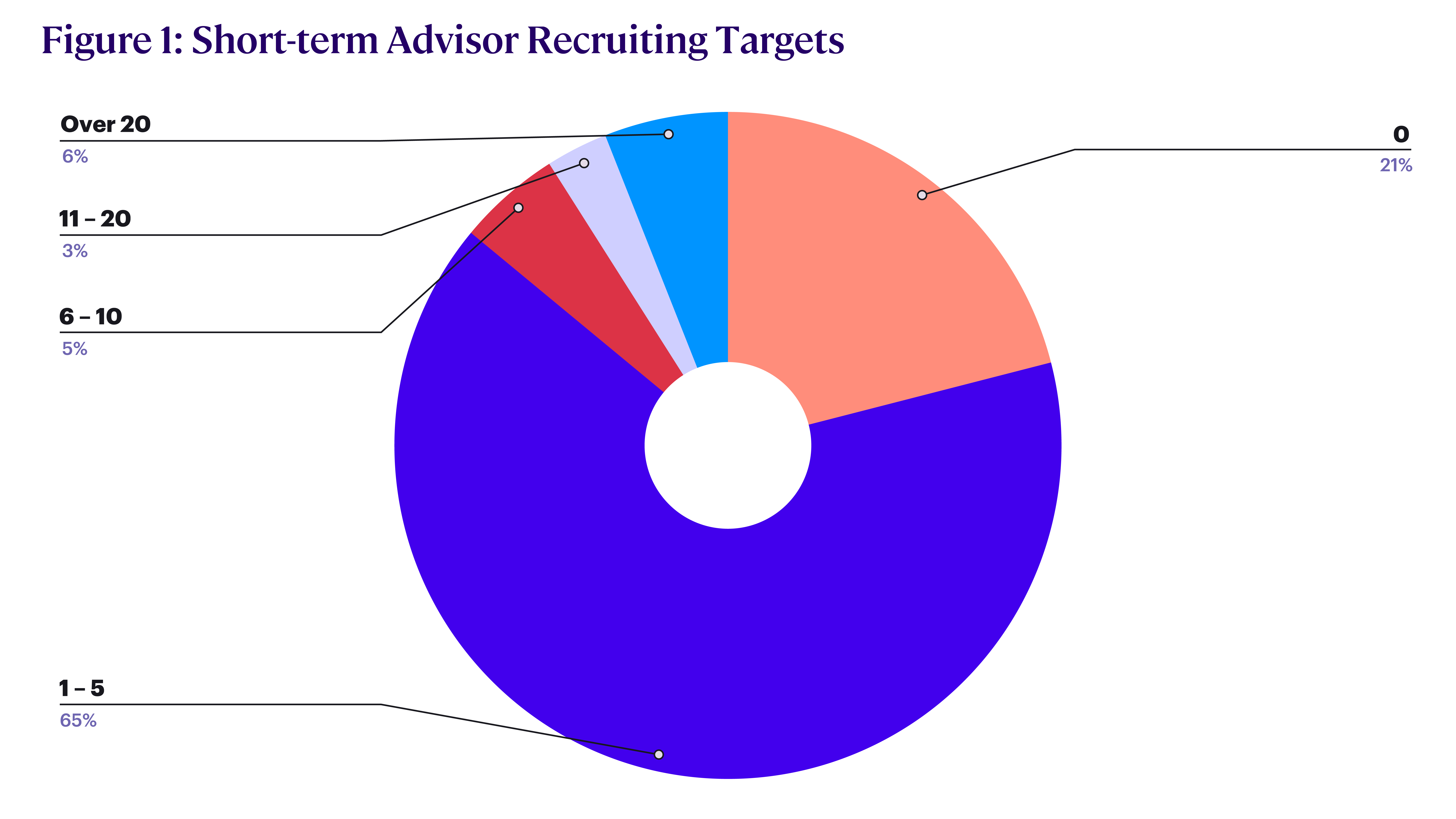
Nearly 80% of emerging RIAs plan on hiring over the next three years, with most looking to recruit one to five new advisors (see Figure 1). 
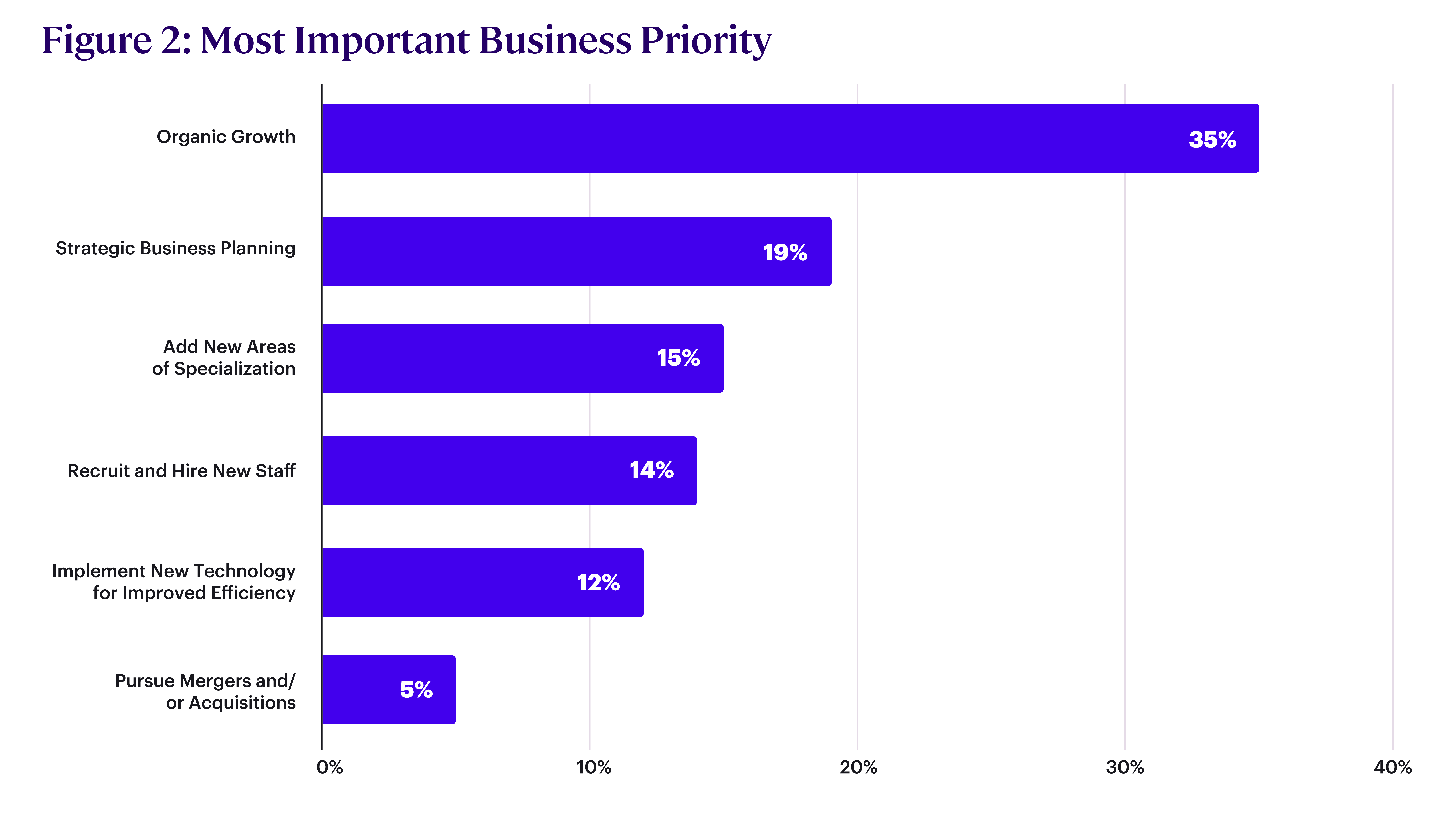
Emerging RIAs are also concerned with broader business growth (see Figure 2). 
RIAs See Value in the Right Education 


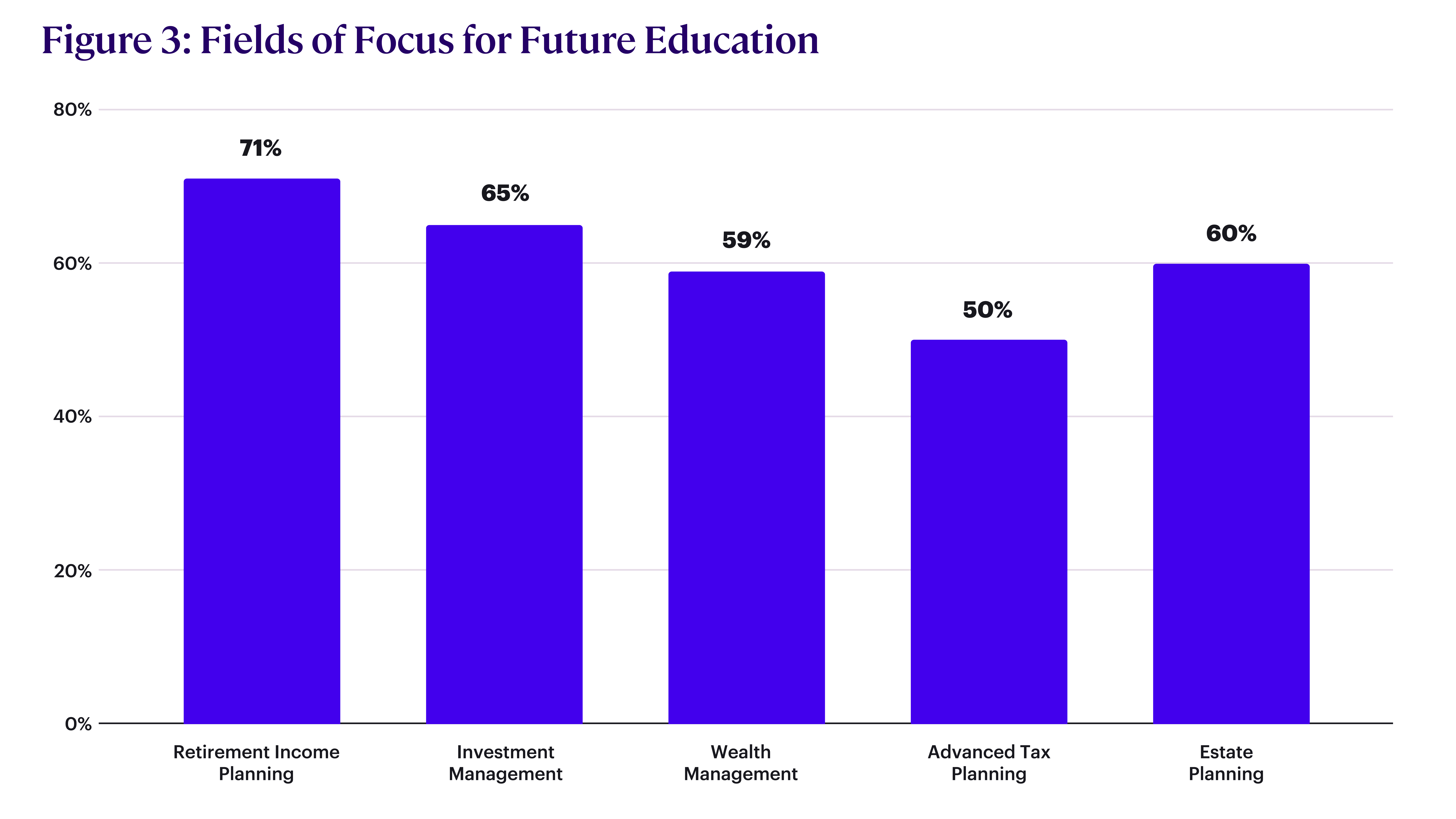
Given that growth is a priority, what do RIAs see as a core pathway to achieving it? For most, it is a combination of education and specialization: Importance of further education: 76% of surveyed advisors desire further education on topics important to their clients. Value of specialization: Advisors identified retirement income planning, investment management, wealth management, advanced tax planning, and estate planning as their preferred fields of focus for future education (see Figure 3).
RIAs Accelerate Their Careers with Designations


Most advisors (92%) believe that designations have a positive impact on their careers, and 79% think that designations support further service integration (see Figure 4). 
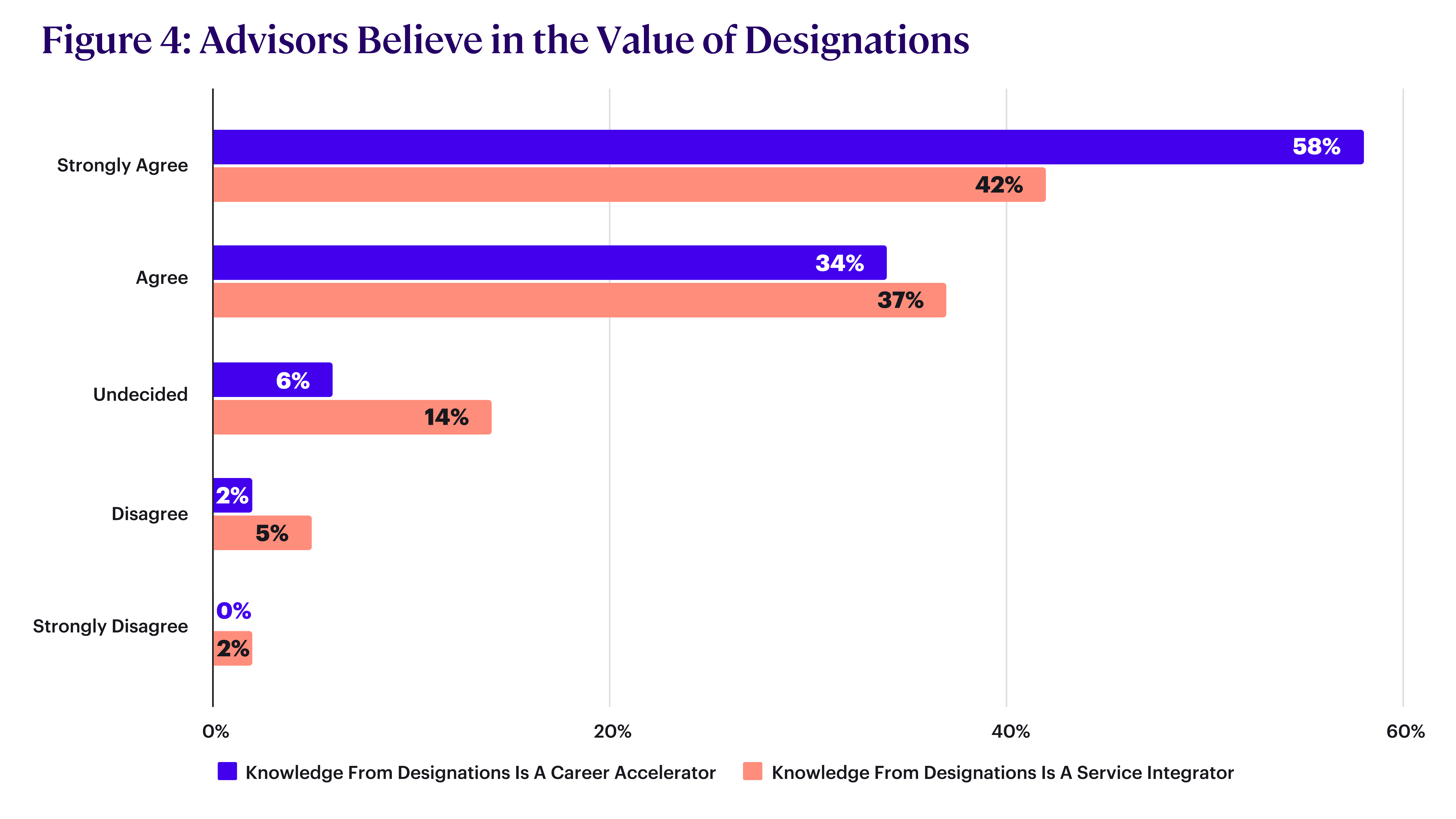
Designations, including those available in The College's ChFC®, CLU®, and RICP® Programs, are a key career accelerator for ambitious advisors and can help drive organic growth.

For more insights, download a summary of the survey now.

cb15 resource post

Author

Subscribe to Newsletter

Submit

Related Posts

Representation Research

Advisors’ Perceptions of Success Study

With FINRA statistics finding that just as many advisors enter the business as enter it every year, the perception of financial services as a field that’s hard to break into and even harder to find success in has become embedded not only in the minds of the public, but also within financial services professionals themselves. Newcomers to the business comment on the competitive nature of the field and how they are sometimes encouraged to outdo, rather than collaborate with, their fellow professionals to “get ahead.” 

When it comes to improving retention rates of strong talent in financial services, such focus is put on how advisors can become successful that attention is not often paid to what it takes for financial advisors to feel successful. This emotional validation is just as important as data-reinforced evidence, as multiple studies have shown employees who feel a sense of professional accomplishment and achievement in their jobs are happier at work in the long run. Because of this, the industry’s usual benchmarks for success – assets under management (AUM), increased production numbers, or higher premiums – are only a small part of the equation and insufficient to justify the challenging nature of joining the field. 

In early 2022, the American College Center for Women in Financial Services surveyed over 800 financial advisors, asking them to self-evaluate their level of success based on both objective criteria and their subjective, personal definitions of success. The results showed that while most advisors consider themselves “successful,” the factors that drive that belief differ across demographics and require specialized and thoughtful approaches for recruitment, development, and retention of those advisors.

Perceptions of Success: An Overview 


Encouragingly, 7 in 10 advisors surveyed by the Center for Women in Financial Services self-identified as “successful,” indicating a confident workforce mostly meeting employers’ business goals. 60% of respondents also indicated they primarily entered the financial services industry “to serve/help others,” showing a genuine desire to provide valuable guidance and benefit society. 

Among the most important influences in achieving professional success, respondents cited “trust,” “individual effort,” and “specialized knowledge” – especially that gained through designation programs like The College’s – as key factors. However, the implications of these factors begin to diverge when looking at the demographic data. 

The Demographic Divide 


Among those surveyed by the Center for Women, major differences arose between male and female advisors' perceptions of success. Despite consistently meeting established business goals, more women than men (34% to 22%) identified as being “less successful,” demonstrating a potential lack of confidence among women in financial services as to their professional progress. 

On the flip side, however, women were much more likely to view themselves as successful in the first 4-10 years of their practice than men (72% to 57%). This divergence could be explained by a greater emphasis on competition in the socialization of men compared to women, which could make men feel less successful than they really are when using their peers as a benchmark for their success. 

When asked what factors were most instrumental to their success, men and women once again seemed to diverge. Men emphasized the importance of individual effort; women, meanwhile, assigned higher importance to communication, community support, and marketing. 

Business Impacts and Implications 


Overall, the results of the Center for Women’s survey indicated larger teams of advisors might enjoy more widespread feelings of success than smaller ones or individual advisors. This belief also varies by gender between different types of firms. 

Women respondents tended to draw much of their strength from the support of smaller, more dedicated teams they could work with on a personal level, generating a sense of shared community that seemed key for women to be satisfied with their business and their own professional development. By contrast, men in financial services appear to derive a sense of success from overcoming the very challenges associated with working in larger, more competition-driven business models. With that said, however, individual women advisors testified to a much higher rate of success than their male peers (83% to 54%). This could indicate that despite their focus on the power of individual effort, men in the industry may also desire the same support systems women in the industry prize, including mentorship opportunities. 

From the results of this study, it seems clear the financial services industry has room for continued growth and expansion of professional development programs for women – and their male counterparts. It will remain up to industry leaders to meet the moment and invest more time, money, and effort into making these important resources available to developing financial professionals of all demographics. 

Download the research here.

cb15 resource post

Author

Subscribe to Newsletter

Submit

Related Posts

Ethics In Financial Services Research

Toward a Perspective of Stakeholder Culture in the Financial System

Stakeholders in the financial industry—including financial firms, consumers, regulators, and emerging stakeholders like the tech industry and social media—increasingly acknowledge the importance of working together to improve the industry and prevent future crises. Yet their actions do not reflect their pro-stakeholder rhetoric and self-interest remains paramount. 

A study commissioned for the American College Cary M. Maguire Center for Ethics in Financial Services argues that one key reason for stakeholders’ failure to work together may be their problematic beliefs. 

The tables below summarize some of the persistent, negative beliefs that financial system stakeholders hold. Overall, they see one another in competitive, rather than collaborative terms. Consumers and regulators believe that financial firms are motivated by greed and blind to others’ needs, while financial firms and other powerful players see their role in terms of driving growth and generating profit rather than building a system that works for everyone. 

These antagonistic beliefs undermine stakeholder relations. Mutual mistrust and the absence of a sense of shared responsibility mean that stakeholders approach one another with suspicion and try to dominate rather than collaborate. As a result, the financial system remains vulnerable and fails to serve everyone’s interests. 

The current financial system incurs high costs in financial failures and from low trust. Improving the situation will require key stakeholders to rebuild relations and develop a sense of shared destiny. 

Financial firms and professionals can start by: 

  • Better understanding the “blind spots” that bias how they perceive their roles and the roles of other actors. 
  • Finding overlapping areas of self-interest with other stakeholders to develop a vision of common interest. 
  • Creating a roadmap of coordinated action to tackle shared problems across critical areas. 
  • Agreeing on more productive behavior patterns, especially toward transparent and timely knowledge and information sharing. 
  • Finding new reporting and governance mechanisms to hold each other accountable. 

The study also explores: 

  • How financial firms’ competitive orientation may undermine their credibility and informal influence over consumers. 
  • Why financial firms prefer to retain power rather than pursuing shared interests, even at the expense of consumer trust and the risk of more regulation. 
  • The impact that emerging stakeholders like social media, tech companies, and others may have on traditional financial system dynamics.

Download the White Paper

cb15 resource post

Author

Subscribe to Newsletter

Submit

Related Posts

Retirement Planning Press

Americans Not Ready To Help Themselves: Three Out of Four Older Americans Fail Retirement Income Literacy Quiz

These findings are part of the new RICP® Retirement Income Literacy Survey from The American College of Financial Services – the most comprehensive survey exploring the drawdown phase of Americans' financial lifetimes, when people are no longer receiving a paycheck from their jobs but must still fund their lifestyles during a potentially lengthy retirement.

"Over the next 12 years, an estimated 10,000 Baby Boomers will reach the age 65 every day," said David Littell, Retirement Income Program Co-Director at The American College of Financial Services. "More and more Americans are retiring but so few understand basic facts and strategies when it comes to ensuring that their retirement is a comfortable one. The results of this survey are alarming and a stark reminder of the need to be prepared for the decades in retirement when you are not earning a steady stream of income." 

Americans believe they know a lot more than they do when it comes to retirement income literacy. Although the majority fail the quiz, most are also confident about their retirement income knowledge. Almost two thirds (61%) of respondents indicate they have high levels of retirement income knowledge. Of those who claim to be highly knowledgably, only 33% could pass the quiz. 

The Demographic Divide 

There are significant differences in literacy rates between men and women, college educated and non-college educated, and between wealthier and less wealthy respondents. 

  • Only 17% of women passed the quiz as opposed to 35% of men 
  • 49% of respondents with over $1 million in assets passed as opposed to 20% of respondents with below $1 million in assets 
  • 40% of those with a graduate degree or more passed – as opposed to just 9% of respondents without a college degree who passed 

Littell continued, "The drastic demographic differences are unsettling because all Americans – regardless of background – deserve to live out their retirement comfortably. This divide underscores how important it is for everyone to plan ahead." 

Clueless on Strategies to Improve Retirement Security 

Respondents lack knowledge of the strategies that are most effective to improve retirement security. 

  • Only 33% understand that it is more effective to work two years longer or defer Social Security for two years than to increase retirement contributions by 3% for five years just prior to retirement 
  • Fewer than half (45%) recognize that a life annuity can protect against life expectancy risk 
  • Only 38% of participants in the survey know that 4% is the amount they can afford to "safely" withdraw per year from a retirement account 

Jamie Hopkins, Retirement Income Program Co-Director at The American College of Financial Services said, "Retirees are living much longer so there's a need for smart advice around how to turn consumers' nest eggs into something they can live on for up to three decades or longer in many cases." 

Long-Term Care: Out of Sight, Out of Mind 

Very worrying is the fact that a majority (82%) of respondents do not expect that most older Americans will need long-term care at some point in their lives. When considering long-term care, respondents lack knowledge on several critical items. 

  • Just one in three (33%) know that Medicaid pays for the majority of long-term care expenses provided in nursing homes 
  • Just 30% know that family members – not nursing homes, assisted living facilities, or hospitals – provide the majority of long-term care costs 

Hopkins also noted, "It is extremely hard to put a good retirement plan in place when consumers are not literate about the risks they face and how to solve for these risks. For instance, the misunderstandings about long-term care shown in the survey indicate that people don't understand the huge burden a long-term care event will have both on their finances and family." 

Power of Retirement Literacy 

Retirement literacy rates appear to correlate with better retirement planning as those with higher scores are more likely to have plans in place. Respondents who passed the quiz were: 

  • 46% more likely to have a long-term care plan in place 
  • 36% more likely to feel confident they could manage their own investments throughout retirement 
  • 16% more likely to have a written plan in place 

Littell continued, "With more and more Americans entering into retirement each year, there is a premium on retirement literacy. The time is now for retirees and pre-retirees to gain the knowledge they need to make smart decisions for a financially secure retirement. It is critical to have a plan in place in order to ensure you are on track for secure retirement years." 

Methodology 

The American College of Financial Services commissioned Greenwald & Associates for the study. Respondents were asked a number of knowledge, behavior and attitudinal questions about retirement income planning. 

Information for this study was gathered through online interviews conducted between February 16 – March 1, 2017. A total of 1,244 Americans were interviewed. To qualify for participation in the study, respondents had to be ages 60-75 and have at least $100,000 in household assets, not including their primary residence. 


ABOUT THE AMERICAN COLLEGE OF FINANCIAL SERVICES 

Founded in 1927, The American College of Financial Services is the nation’s largest nonprofit educational institution devoted to financial services professionals. Holding the highest level of academic accreditation, The College has educated over 200,000 professionals across the United States through certificate, designation, and graduate degree programs. Its portfolio of applied knowledge also includes just-in-time learning and consumer financial education programs. The College’s faculty represents some of the foremost thought leaders in the financial services industry. Visit TheAmericanCollege.edu and connect with us on LinkedIn, Twitter, Instagram, Facebook, and YouTube. Discover all the ways you can expand your opportunities with us.

cb15 resource post

Author

Subscribe to Newsletter

Submit

Related Posts

Retirement Planning Press

Time To Take Retirement Into Their Own Hands: Over 80% of Women Fail Retirement Income Literacy Quiz

Nearly twice as many retirement-age men are able to pass, and although those numbers are still grim, this underscores the trouble women face in their own retirement knowledge. Even more worrisome is that despite low retirement literacy, the majority of women (55%) are still extremely confident that they and their spouses would have enough money to retire comfortably. 

These findings are part of the RICP® Retirement Income Literacy Survey from The American College of Financial Services – the most comprehensive survey exploring the drawdown phase of Americans' financial lifetimes, when people are no longer receiving a paycheck from their jobs but must still fund their lifestyles during a potentially lengthy retirement. 

Women demonstrated lower literacy rates in 10 out of 12 knowledge categories. There was a discrepancy in performance between men and women across the areas of annuity products in retirement (16% vs 24%), company retirement plans (30% vs 40%) and investment considerations in retirement planning (21% vs 49%). However, women performed just as well as men (76%) on the topic of Medicare insurance planning and actually exceed on the topic of paying for long-term care expenses (38% vs 35%), which is important as women live longer on average. 

Retirement Income Literacy: Don't Know, Don't Care 

Women are aware that they have poor retirement literacy – yet this does not impact their confidence in retirement. Only a third (33%) of women stated they were extremely knowledgeable about retirement income planning, compared to 44% of men. However the majority of women (55%) reported they were extremely confident they would have enough money to live comfortably throughout retirement. 

  • Only 24% of extremely confident women could pass the quiz while roughly 42% of the extremely confident men could pass the quiz. 
  • In all 12 knowledge categories – including strategies for sustaining income, life expectancy, and life insurance – women reported lower self-perceived retirement income planning knowledge than men. 

"Women face considerable challenges when it comes to preparing for retirement, and lacking financial literacy certainly does not help the cause," said Jocelyn Wright, State Farm® Chair in Women and Financial Services and Assistant Professor of Women's Studies at The American College of Financial Services. "This is a problem, especially when a female at age 65 can expect to live another 20 years on average, two years longer than the average man. With this in mind, women cannot depend on their spouse to hold the keys to their retirement. It is time to get smart on how to navigate this complex and extremely important stage of life." 

Financial Decision-Making: Riding in the Passenger's Seat 

Men tend to think they are the primary decision maker while women tend to believe that they split the decision making. In fact, there is a disconnect between finances being a team effort. Eighty percent of women said that they shared the decision making with their spouse while only 35% of men stated they shared the decision making. Women were also less likely to use resources such as friends or the internet for advice and information around financial assets. 

  • Only 20% of women responded that they were the primary financial decision maker, compared to 65% of married male respondents. 
  • Only 27% of women stated that they consult friends for advice and information about financial assets, compared to 39% of men. 
  • 46% of female respondents looked up financial information online at least once a year, compared to 61% of male respondents. 

Interestingly, women respondents who identified themselves as the primary financial decision maker in the household were more than twice as likely to pass the retirement literacy quiz (26%) than those that identified themselves as sharing the decision making (12%). 

Silver Lining: Knowing Where to Turn 

Although the majority of women are lacking retirement income literacy, most do understand the value of a financial advisor and believe advisors are a good source of knowledge around retirement income. The survey found that women were just as likely as men to consult a financial advisor or a financial services firm to get financial information. Women also had different expectations from their advisor. 

  • About half (55%) of women with a financial advisor stated that it is extremely important that their financial advisor educate them about the risks of running out of money in retirement, as opposed to only 42% of men. 
  • Additionally, 60% of women said it is important to receive education from an advisor about investment management, as opposed to only 47% of men. 

"All people, regardless of gender, should be equipped with the knowledge that could better prepare them for retirement," said Jamie Hopkins, Retirement Income Program Co-Director at The American College of Financial Services. "Women face a number of challenges that the average man does not face in retirement, including greater longevity. So in some ways women should be more aggressive investors and have better retirement income literacy rates as they need to make their money last even longer in retirement." 

Methodology 

The American College of Financial Services commissioned Greenwald & Associates for the study. Respondents were asked a number of knowledge, behavior, and attitudinal questions about retirement income planning. 

Information for this study was gathered through online interviews conducted between February 16–March 1, 2017. A total of 1,244 Americans were interviewed. To qualify for participation in the study, respondents had to be ages 60-75 and have at least $100,000 in household assets, not including their primary residence. 


ABOUT THE AMERICAN COLLEGE OF FINANCIAL SERVICES 

Founded in 1927, The American College of Financial Services is the nation’s largest nonprofit educational institution devoted to financial services professionals. Holding the highest level of academic accreditation, The College has educated over 200,000 professionals across the United States through certificate, designation, and graduate degree programs. Its portfolio of applied knowledge also includes just-in-time learning and consumer financial education programs. The College’s faculty represents some of the foremost thought leaders in the financial services industry. Visit TheAmericanCollege.edu and connect with us on LinkedIn, Twitter, Instagram, Facebook, and YouTube. Discover all the ways you can expand your opportunities with us.

cb15 resource post

Author

Subscribe to Newsletter

Submit

Related Posts

Retirement Planning Press

Americans Left Guessing for Their Golden Years: Four out of Five Older Americans Fail Retirement Income Literacy Survey

Retirees and pre-retirees (ages 50-75) displayed a lack of knowledge around awareness of income in retirement, basic investment management and understanding of long-term care needs – yet those with a written retirement plan in place reported feeling more prepared to navigate the COVID-19 pandemic than their counterparts did. 

A majority of respondents are holding their financial plans steady amid the COVID-19 pandemic, yet just one in three report having a formal, written retirement plan in place. 

These findings are part of the third iteration of the Retirement Income Literacy Survey from The American College of Financial Services, testing consumers’ knowledge about retirement income concepts and focusing on the drawdown phase when Americans have limited or no ability to earn additional money through work. This year’s study expanded the scope of those surveyed to include Americans ages 50-75. 

“With a troubled economy and an acceleration of early or forced retirements, consumer understanding of retirement principles is particularly important. Yet the survey demonstrates that retirement literacy remains troublingly low,” said Steve Parrish, JD, RICP®, CLU®, ChFC®, RHU®, AEP®, Adjunct Professor of Advanced Planning and Co-Director of the Retirement Income Center at The American College of Financial Services. “Financial advisors should take heed of this situation and embrace the opportunity it provides to help Americans prepare for a successful retirement.” 

Knowledge Gap Needs to Close in Retirement Income Planning and Investment Management 

Retirement literacy in 2020 remains low overall, as was the case in The College’s 2014 and 2017 surveys, with eight in ten (81%) failing a 38-question retirement literacy quiz. In fact, the average score of the quiz was just 42%. This is further underscored by consumers’ own lack of confidence – only a third of consumers consider themselves highly knowledgeable about retirement income planning. 

Among the financial planning elements driving low scores on the quiz was consumers’ particularly low level of knowledge about preserving assets and sustaining income in retirement: 

  • More than half underestimate the life expectancy of a 65-year-old man, suggesting that many do not realize how long their assets may have to last.
  • Only 32% know that $4,000 is the most they can afford to “safely” withdraw per year from a $100,000 retirement account, suggesting most do not know how to determine a prudent withdrawal rate.
  • Only 35% know that a negative single year return in a retirement portfolio has the most significant impact on long-term retirement security if it happens at the year of retirement, suggesting a fundamental lack of knowledge about investment risk in the pre-retirement and retirement period. 

“Determining how much you can spend in retirement when you don’t know how long you will live or what market returns you will experience is complicated,” said Wade Pfau, PhD, CFA, RICP®, Professor of Retirement Income, RICP® Program Director, and Co-Director of the Retirement Income Center at The American College of Financial Services. “Unfortunately the task is even harder for Americans who do not recognize how to properly evaluate these risks in the first place, and who do not understand the lasting impact of a market downturn in the early years of retirement. The survey demonstrates that these retirees don’t fully understand the consequences a bad market can have on their long-term retirement prospects.” 

Consumers also displayed a significant lack of knowledge when it comes to understanding investments, despite the fact that a majority self-report that they are at least moderately knowledgeable about investment management. 

  • Just 26% understand that the value of bonds and bond funds falls as interest rates rise.
  • Just 28% know that actively managed mutual funds have higher fees than ETFs.
  • Only 18% know that B-rated corporate bonds have higher yield than AAA corporate bonds or treasury bonds. 

Long-Term Care is an Afterthought Leaving Many Unprepared 

The survey found that only three in ten (31%) have a plan in place for how to fund long-term care needs and only one in four (23%) have some sort of long-term care insurance coverage. Very worrying is the fact that most older Americans are split on whether they will even need long-term care insurance in the future: 

  • Half (50%) say it is at least somewhat likely they will need long-term care services in the future. Only 8% consider it very likely that they will ever experience a long-term care need, even though the reality is that 70% will.
  • 52% of respondents have not looked into long-term care insurance at all.
  • Just 25% know that family members provide the majority of long-term care services nationally, which is concerning as 70% of respondents do not expect their family members to provide the care, highlighting a disconnect in the planning process. 

“The story coming from the data suggests that people underestimate their life expectancy – and what’s more, assume they will be healthy for the entirety of their life,” said Timi Jorgensen, Assistant Professor and Director of Financial Literacy at The American College of Financial Services. “Advisors can help with long-term care conversations, and they can work with clients to make a plan on when and how to have these crucial discussions with family about the likelihood of healthcare needs.” 

COVID-19 Preparedness: Better with a Written Plan 

Nearly four in ten (39%) consumers reported feeling highly prepared for the market downturn associated with the pandemic. Interestingly, what made a difference in consumers’ perception of preparedness for the crisis was having a formal, written retirement plan: 

  • Those with a written retirement plan (47% vs. 35% of those without) or a retirement income plan (43% vs. 22%) reported feeling more prepared to deal with the market downturn.
  • Yet only one in three (33%) respondents report having a written plan. 

While many felt prepared, the pandemic has shifted the mindset of many investors. Four in ten (39%) say they now feel less comfortable taking investment risk. Only 8% say they’ve adjusted their allocations to be more conservative, but a realignment of risk tolerance is noteworthy. More than half (54%) of consumers said they are holding their financial plans steady. 

“A bottom-line conclusion from this survey is that until the plan is written, it isn’t real. And the pandemic showed that those with a real plan are in better shape to grapple with forced financial changes,” said Parrish. “We are in an environment where people are coming into retirement, sometimes faster than expected, without an approach to converting their pot of money into a stream of income, and yet they are looking at increased life expectancy, increased risk of a long-term care event, and decreased prospects of having their needs covered by Social Security and employer plans. This is a clarion call for financial advisors to help their clients increase financial literacy and, together, craft a plan for a successful retirement.”


STUDY METHODOLOGY 

The American College of Financial Services commissioned Greenwald & Associates for the study. Respondents were asked a number of knowledge, behavior, and attitudinal questions to assess retirement literacy among individuals who are approaching or already in retirement. Information for this study was gathered through online interviews with over 1,500 Americans conducted between April 29 – May 18, 2020. To qualify for participation in the study, respondents had to be ages 50-75 and have at least $100,000 in household assets, not including their primary residence. 

ABOUT THE AMERICAN COLLEGE OF FINANCIAL SERVICES 

Founded in 1927, The American College of Financial Services is the nation’s largest nonprofit educational institution devoted to financial services professionals. Holding the highest level of academic accreditation, The College has educated over 200,000 professionals across the United States through certificate, designation, and graduate degree programs. Its portfolio of applied knowledge also includes just-in-time learning and consumer financial education programs. The College’s faculty represents some of the foremost thought leaders in the financial services industry. Visit TheAmericanCollege.edu and connect with us on LinkedIn, Twitter, Instagram, Facebook, and YouTube. Discover all the ways you can expand your opportunities with us.