


February 26, 2026
As we mark Black History Month this year, I’m drawing inspiration from legends, including the late Rev. Jesse Jackson, and focused on helping the next generation of financial leaders.
Reflecting Together
Each year, I take time during Black History Month to reflect on our past, but also our present and our future. When I say “our” past, present, and future, I’m including all of us. I believe regardless of race, we are in financial services together to benefit society through our noble profession. I believe we are stronger together. And, as I’ve said in the past, I believe Black history is American history. There’s so much knowledge and inspiration we can gain from understanding it together.
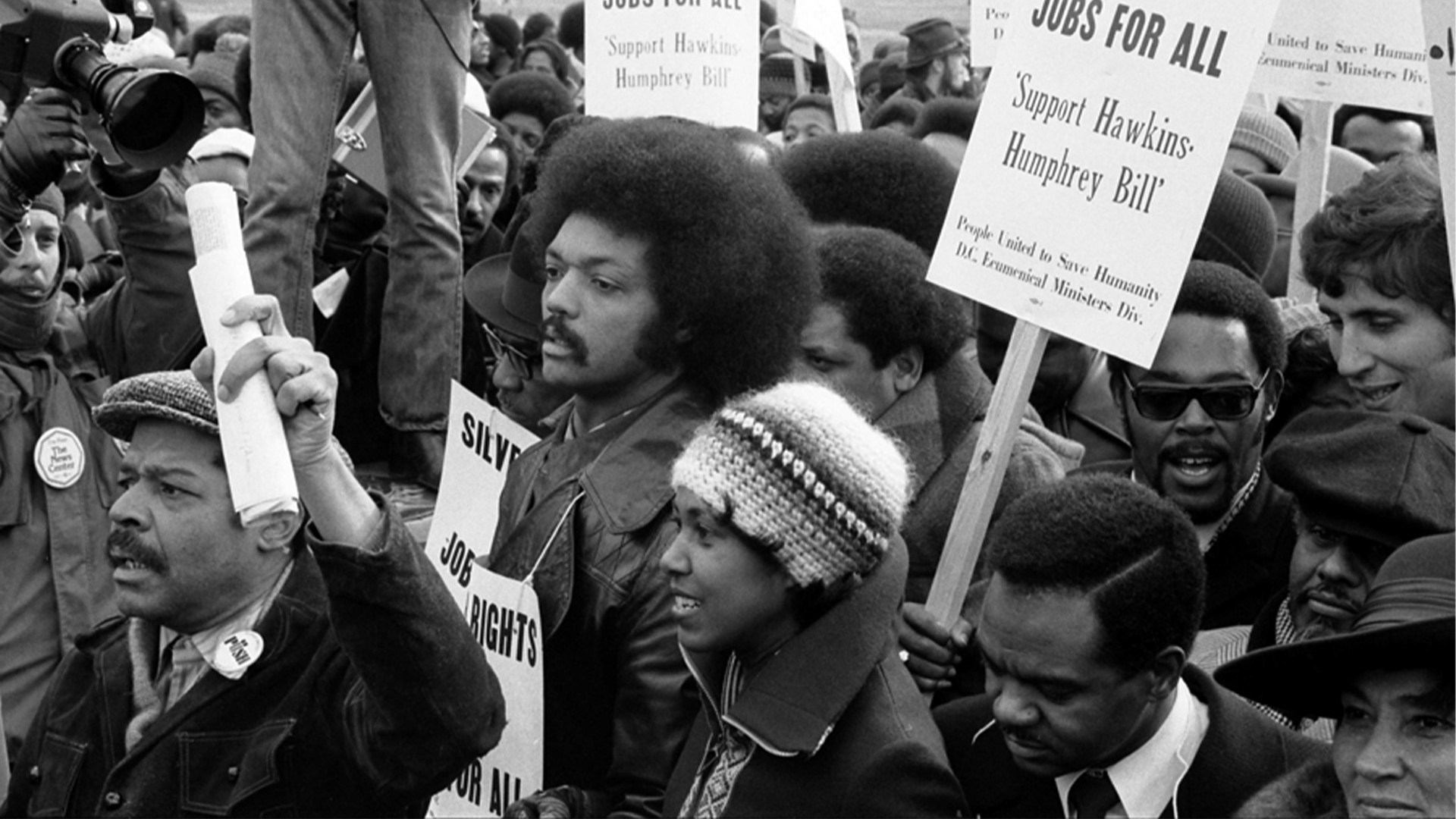
This year, I’m inspired to think about what leadership and legacy mean, as I reflect on the recent passing of a legend in the Black community and American history, the Rev. Jesse Jackson. I had the opportunity to meet with Jackson, work with him, and see how he approached things. I disagreed with him on certain subjects, but I never questioned his commitment to the people he was trying to serve.
I remember Jackson as a personable and purposeful man. Given his connection to the Rev. Martin Luther King Jr. and his contribution to Black life in America, he was also a historical figure. What can we learn from this iconic and influential, yet flawed and controversial man?
Remembering a Legend
The Rev. Jesse Jackson emerged as a leader during the civil rights era, working alongside the Rev. Martin Luther King Jr. to fight for equality through marches, sit-ins, and rallies starting in the 1960s. He earned his bachelor’s degree at North Carolina A&T in 1964 and went on to pursue his master’s at the Chicago Theological Seminary. He left the seminary to join the civil rights movement in 1966 and became a minister in 1968. (The Chicago Theological Seminary awarded Jackson his master of divinity degree in 2000, in recognition of his studies as well as his life’s work.) Jackson made the move from political activist to politician and later mounted two presidential campaigns.
In his Rainbow Coalition speech to the Democratic National Convention in 1984, Jackson famously said, “America is not like a blanket — one piece of unbroken cloth, the same color, the same texture, the same size. America is more like a quilt: many patches, many pieces, many colors, many sizes, all woven and held together by a common thread.” His message was one of unity amidst diversity.
"America is more like a quilt: many patches, many pieces, many colors, many sizes, all woven and held together by a common thread.”
- Rev. Jesse Jackson
At times in his career and personal life, Jackson was caught doing and saying the wrong things (some would say that’s an understatement). No one can deny his humanity or fallibility. Yet his legacy will remain for decades, if not centuries, to come. Why? I believe it’s because Jackson lived his public life aligned to a cause for which he worked tirelessly. He also anchored his activism to his Christian faith, striving first and foremost to serve, and to lead from a place of service.
Upon his death on February 17, the Jackson family shared a public statement that read, "Our father was a servant leader — not only to our family, but to the oppressed, the voiceless, and the overlooked around the world. We shared him with the world, and in return, the world became part of our extended family.”
This statement says so much about how he led his life, as well as how he and his family viewed his role in society: a man who put service first and aspired to make a difference in the world.
Becoming Legendary
I’ve had the pleasure of getting to know individuals who have achieved legend status in their own spheres of influence. Among them, I can think of several men and women who are alumni of The College. Each of them has worked tirelessly for a cause — with impact beyond their client base, impact that expanded across their community. Each of them has put others before self. We could call them “servant leaders” and their families might also say, “we shared them with the world.” They became legends not because they sought to become legendary, but because they set out to serve.
Servant leadership aligns to The College’s mission: We provide applied financial knowledge and education, promote lifelong learning, and advocate for ethical standards to benefit society. All those verbs – “provide,” “promote,” “advocate,” and “benefit” – really mean one thing: to serve. Financial knowledge and education, lifelong learning, and ethical standards are our “how.” To serve is our “why.” Mission-driven to serve, within a profession centered on service, it’s no wonder The College has become alma mater to many financial industry legends.
But what does all of this have to do with Black History Month? Recalling Jackson’s metaphor, if the financial services industry is a quilt, then The College is a common thread, sewing together the various, diverse patches. Many of the legends in our industry have focused on growing representation (that is, more financial advisors from more diverse backgrounds) and making financial services more inclusive, in part through our Centers of Excellence.
I see the role of The College, and my role as its president, as that of a unifier in an industry made up of different verticals and lines of business, different types of firms and operating models, and yes, different demographics. It’s an exciting time to be stitching together the fabric of financial services, crafting this quilt for all the communities it will cover in the future.
It’s an exciting time to be stitching together the fabric of financial services, crafting this quilt for all the communities it will cover in the future.
Leaving a Legacy
The fabric of our industry is changing. As the aging U.S. population requires more in-depth financial guidance, the Bureau of Labor Statistics projects double-digit job growth in the number of personal financial advisors — an estimated 741,543 new jobs by 2033.
It’s exciting not only for us, but for aspiring professionals eyeing our industry for job prospects. There are many college students, recent graduates, and experienced job-changers who would love to start their career in financial services. The CFA Institute’s Graduate Outlook Survey found the financial industry to be the #1 career choice among Gen Zers (that is, teens and young adults ages 14 to 29). And the Census indicates Gen Z is the most racially and ethnically diverse generation in U.S. history.
Black Gen Zers – including first-generation college students and graduates – are significantly more interested in financial services than most of their peers, according to The College’s recent Onboarding Gen Z Study. They’re also more likely to feel ready to start their career in financial services (32% of Black Gen Zers feel prepared, compared to 22% of other Gen Zers). Drawing these job candidates into the profession may not be the challenge – but helping them find the right fit and mentoring them along the way may be exactly what they need to become the leaders of the future.
This is where the College community shines: our network of students, alumni, partner firms, and friends of The College comes together to support newcomers to the profession and walk with them on their career journeys. Our valued volunteers and benefactors are committed to helping promising financial professionals boost their chances of career success through applied financial knowledge. This is how legends and legacies are made. This is servant leadership.
In 2025 alone, The College garnered $864,810 in scholarship funds and awarded 173 scholarships thanks to the generosity of donors. In August of this year, we will convene and celebrate the 20th Conference of African American Financial Professionals (CAAFP) in Chicago, bringing together Black financial professionals of all generations and financial specializations. The American College Center for Economic Empowerment and Equality (CEEE) will kick off a new cohort of the CEEE Executive Leadership Program and will bring 50 NextGen undergrads to CAAFP, supported by donor funding.
Black and African American job candidates say they’re interested and prepared for a career in financial services, but only you – the financial professionals who have been there – can say what those first three years really feel like. This is a critical area of focus as we continue to prioritize representation as part of The College’s ongoing strategy. And it’s an opportunity to serve.
With your support, we look forward to raising awareness of the opportunities available, the realities of the profession, and the reasons to stay engaged even during (and after) those first trying years of training. This is how we will help leave a legacy that extends beyond the Black community, and beyond this month of recognition.
In recognition of Black History Month, I hope you will explore the ways you can help onboard and uplift the next generation of Black financial professionals. Let’s leave a legacy, together.
Thank you for your leadership – and your service!
More From The College
- Explore the work of the Center for Economic Empowerment and Equality
- Learn more about scholarships or donate to our scholarship fund
- Read more about attracting and retaining talent in the Onboarding Gen Z Study
- Save the Date! The 20th CAAFP is coming to Chicago, August 3-5
Related Posts