

Subscribe to Newsletter
Related Posts
April 15, 2026
Longevity risk can derail retirement, but planning ahead ensures clients enjoy a secure, lasting income.
Longevity risk is one of the most overlooked threats to a successful retirement, and one of the most consequential. While many clients diligently plan for market volatility, taxes, and healthcare expenses, they often fail to account for a simpler, more uncomfortable reality: they may live far longer than they expect. For advisors, addressing longevity risk is crucial to helping clients sustain and enjoy their retirement.
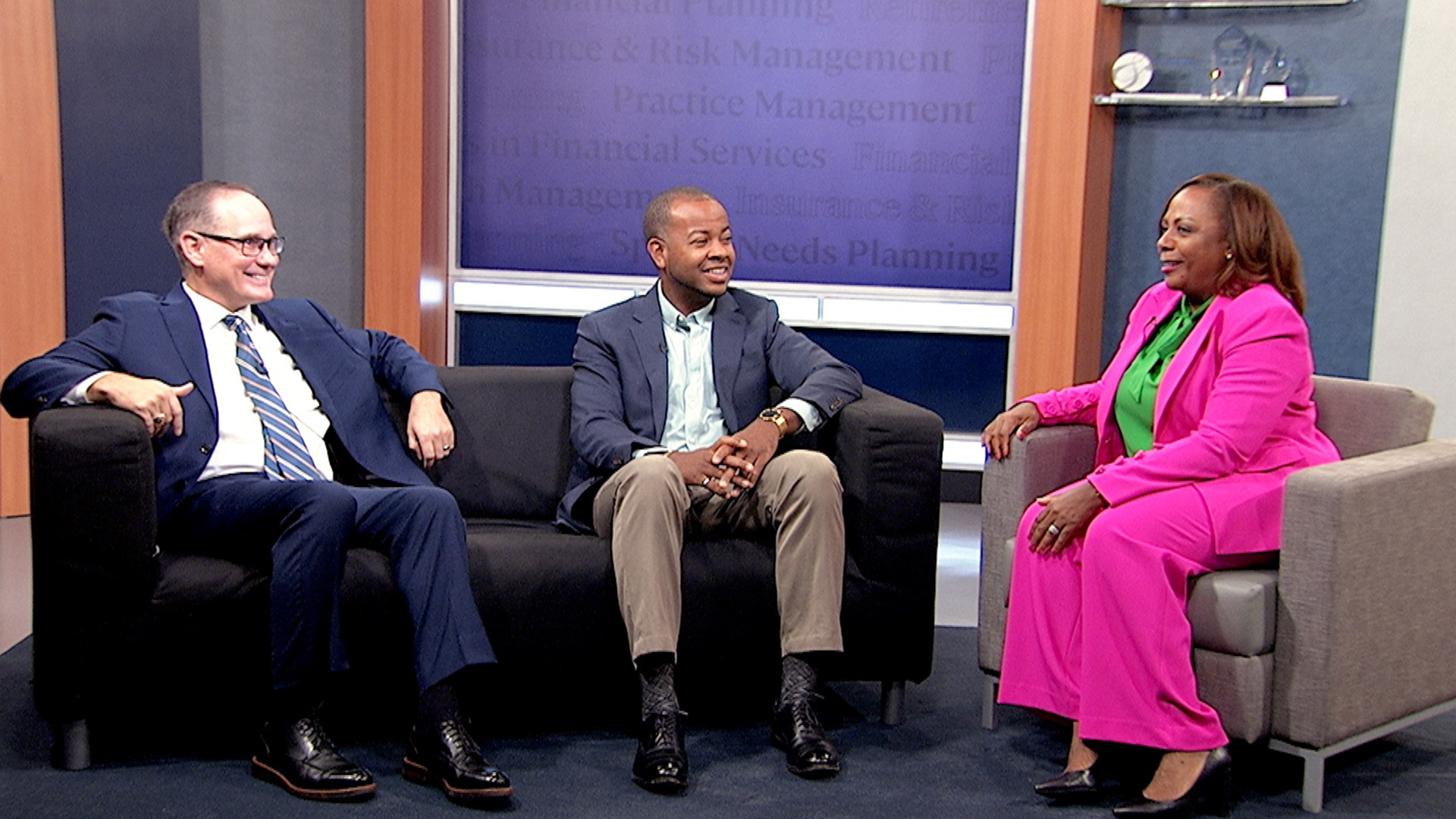
During a recent discussion among FinServe Network ambassadors, Terrell Dinkins, MBA, RICP®, ChFC®, Scott Winslow, MSFS, ChFC®, CLU®, RICP®, AEP®, CCFC®, and Terry Parham Jr, TPCP®, RICP®, CLU®, ChFC®, WMCP®, CFP®, MSFP, CEPA®, spoke about their experiences discussing longevity risk with their clients in or nearing retirement.
Why Clients Often Underestimate Longevity Risk
One of the core challenges advisors often face is simply getting clients to acknowledge the possibility of a longer-than-expected life. According to Dinkins, this blind spot can have serious consequences.
“If you don’t consider longevity risk, [you] could outlive your money, and I don’t think clients think about that,” Dinkins said. “A lot of the time when I’m planning, even though it can sound cookie-cutter, I’m actually running numbers based on living to 100.”
As optimistic as that calculation might sound, Dinkins isn’t overestimating. Research conducted by The College and the Nationwide Retirement Institute suggests that the number of Americans living to age 100 or older could quadruple by 2054 — yet only 27% of survey respondents correctly estimated the average longevity of a 65-year-old.1
Winslow echoed that observation, noting the emotional resistance many clients have when the conversation turns toward longevity. “I think they have a hard time looking at their own mortality, and people are thinking more about fun things than dying or living too long.”
This avoidance can lead clients to underestimate how long retirement may last, focusing on short-term lifestyle goals rather than long-term sustainability.
The Impact of Longevity on Other Retirement Risks
Longevity risk doesn’t exist in isolation; in fact, it can magnify nearly every other risk retirees face.
“Of the list of potential risks in retirement, longevity might be the scariest because it exacerbates all the other risks,” Parham said. “The longer you live, the more times you'll have to deal with interest-rate shocks, the more times you'll have to deal with, potentially, inflation, health-care risk, and long-term care risk.”
Those repeated exposures, combined with rising costs, can derail even the most carefully constructed financial plan, Parham explained.
While products exist to help mitigate longevity risk, Parham noted that clients are often hesitant to adopt them into their financial plans. He pointed to the “annuity puzzle,” in which tools that can hedge longevity risk are often misunderstood or dismissed by consumers. “I think it takes good education and planning to help people understand their options for dealing with all the risks, but especially longevity risk.”
Dinkins agreed, noting the perception challenge around annuities. “The public has given the word ‘annuity’ a bad name.”
She goes on to emphasize that in financial planning, the word “guarantee” is rare, but annuities are one of the few tools that can truly offer clients a guaranteed floor, or a reliable source of income throughout retirement.
Why Average Life Expectancy Isn’t Enough
Another common misstep in retirement planning is relying too heavily on average life expectancy and the lifespans of prior generations. For many clients, particularly those with greater financial resources, using the average as a guideline may dramatically underestimate how long retirement could last.
“If we're looking at life expectancy for people of more affluence, they tend to live longer and they have better access to health care,” said Parham. “So, if you're using the average as your guideline, but your situation is not average, you're already doing yourself a disservice.”
Addressing longevity risk head-on allows advisors to help clients shift from fear to confidence. Rather than viewing retirement as a period of uncertainty, clients can see it as a phase of life that is planned for, sustainable, and enjoyable — no matter how long it lasts.
More on Retirement Planning
- Learn more about retirement planning
- Read more and download a copy of the Century Club white paper for more insights on retirement longevity
- Gain retirement insights when you register for Horizons
Related Posts
1 The American College of Financial Services and the Nationwide Retirement Institute. Planning for a Century of Living. 2025.