

Subscribe to Newsletter
Related Posts
March 26, 2026
For any career, one of the biggest challenges is establishing yourself when first getting started. Hear how you can hit the ground running in the financial services industry.
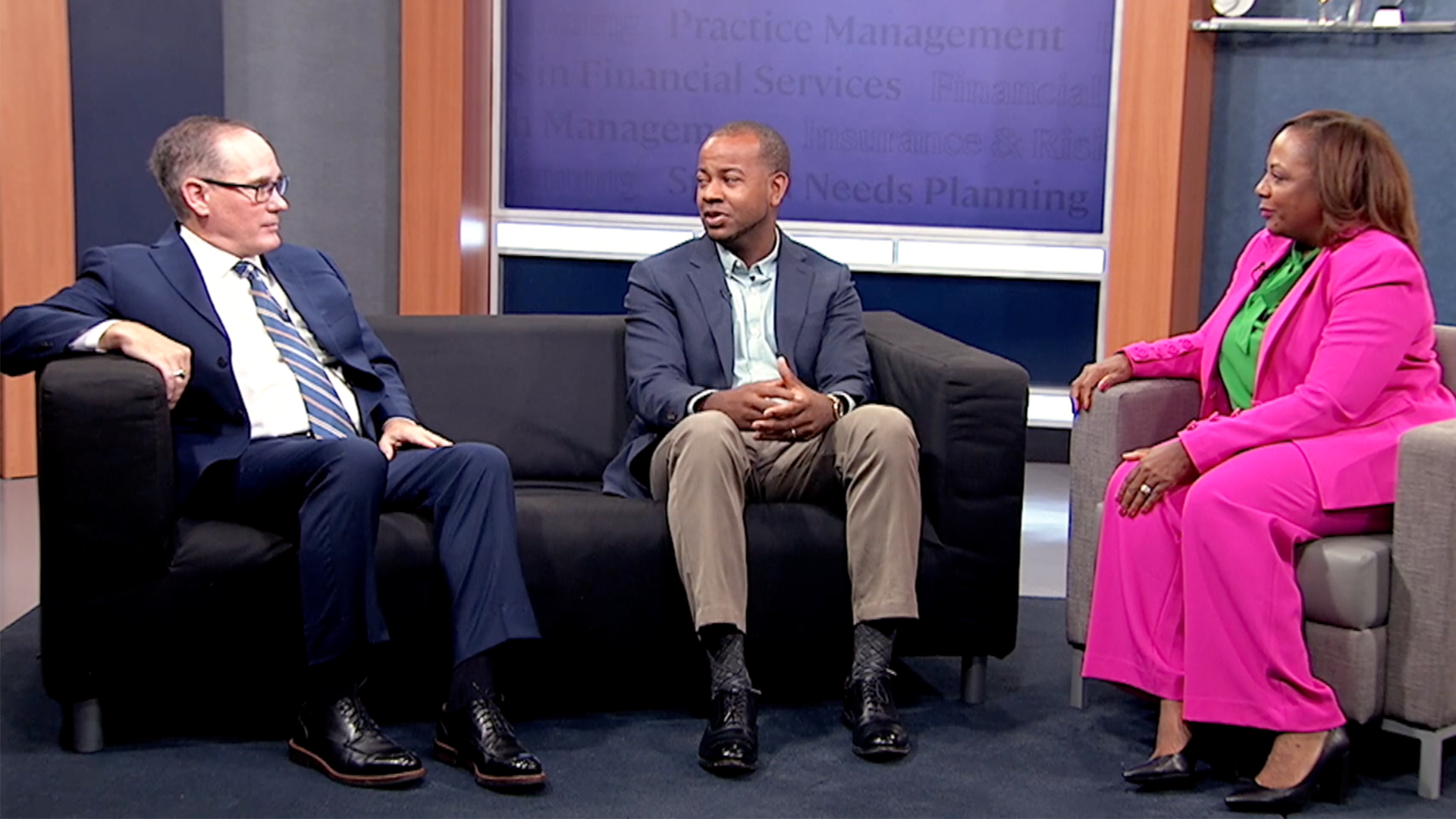
In a recent panel discussion occurring at our 2025 FinServe Summit, Terry Parham Jr, CFP®, RICP®, TPCP®, WMCP®, CEPA®, Terrell Dinkins, MBA, ChFC®, RICP®, and Scott Winslow, MSFS, ChFC®, CLU®, RICP®, AEP®, CCFC, shared their advice to financial advisors just getting started in the profession.
One Size Doesn’t Fit All
The discussion opens with Dinkins talking about how to have the right mindset when working with clients for the first time. “I think that sometimes people miss that. They try to create one plan that fits all. And in our industry, that’s not the case,” she says.
Dinkins emphasizes that clients differ on a case-by-case basis, and advisors need to consider specifics such as individual needs, lifestyles, and more to create a holistic financial plan that helps the client achieve their goals.
She further argues that an advisor needs to be knowledgeable about the specific needs of their clients — one of the key points often made in favor of specialization.
Dinkins specifically points to the advantages of specialized knowledge when working with pre-retirees, and The College’s research sees this realized: Retirement Income Certified Professional® (RICP®) Program alumni report an 81% improvement in their ability to help clients meet their retirement goals.1
Thinking Through the Lens of the Client
Parham follows this up by addressing some of the knowledge gaps many have when they first enter the profession as a financial advisor. “Pretty much anyone moving toward retirement cares about Social Security, Medicare, and maybe Medicaid,” he says. “There’s these topics that traditionally we weren’t taught.”
Parham relates this to the benefits of specialization as well, communicating another key benefit of specialization — setting you apart from your peers and showing you’ll go further and seek excellence in client service.
Intentionality
Winslow builds on Parham’s idea, saying, “If you do so much study work on your own, reading but also formal education and credentialing, you will build...confidence to where you’re unconsciously competent in front of a client.” All three FinServe Network ambassadors agreed on the validity of this point and felt it was a crucial step to establishing yourself as someone who belongs in the industry.
The process Winslow describes is similar to an athlete training a technique that will help them win. At some point, this new motion goes from a trained movement to a reflex — and when that happens with your advice, Winslow says, it will have a huge impact on your ability to serve clients.
Getting Started
As part of our mission to offer expertise for every stage, The College has numerous opportunities for new financial advisors to hone their skills and seamlessly begin their transition to industry veteran. Whether it’s formal coursework, opportunities to network with veteran advisors, research to help you understand the industry as it stands today, or something more, The College aims to help the next generation of financial advisors achieve their calling.
More From The College
- Register for Horizons and learn more about retirement
- Compare retirement designations
- Browse all programs
Related Posts