


June 04, 2026
Nobody enjoys paying their taxes, but if you specialize in tax knowledge and help them do it the right way, you can save them thousands.
Key Points on Retirement Tax Planning
- Tax law changes often, but a few core rules always apply. Follow these and your clients can save thousands of dollars.
- Always help your clients pay taxes at the lowest rate possible.
- Short-term vision is the enemy of good tax planning.
- Take advantage of lower tax brackets.
- Specialized knowledge in tax planning is the key to success.
Why Expertise is Needed for Tax Planning
As a CPA, I learned early on that specialization was the route to help myself achieve success in this industry. Most CPAs focus on tax returns, but this is nothing more than a history lesson for the client. Tax preparation is telling a client what happened in the previous year. I realized that where I could provide real value to the client was in telling them what should happen — in tax planning.
Tax planning is a considerably more specialized skill, and it’s the service that offers the client something of significance. By planning a client’s taxes in advance, I could lower their future tax burdens. With the high-net-worth clients that we seek in this business, saving them a percentage here and there can be a difference of tens of thousands of dollars.
However, when it comes to tax planning, you often need to save clients from themselves. People want to take the path of least resistance, especially when it comes to something unpleasant like taxes. Unfortunately, doing this can result in an increased lifetime tax burden for clients and larger losses. For this reason, I always follow several key rules when it comes to tax planning that I refer to as my “always rules.” I call them “always rules,” because despite the fickle nature of taxes and tax law, these concepts always apply and if you follow them too, you can make sure your clients achieve the dream retirement they’ve been working towards their whole life.
When Should You Advise Clients to Pay Taxes?
You should always pay taxes when you’re able to pay at the lowest rate available. This might seem simple or obvious. However, this is a hard and fast rule that you must convince your clients to stick to no matter what. Sometimes, that even means paying taxes before they are owed, and that’s where you can get resistance from clients.
Many clients and even some accountants have the attitude of, “No, I’m not paying the government one cent till I have to.” This is a flawed way of thinking though, because when it comes to taxes, especially with a large untaxed IRA, the more you save up front, the more it will cost you later.
By reframing how clients view the situation, you can help them make the right decision. When performing a Roth conversion, I tell clients the tax up front isn’t a payment. It’s an investment in your future financial security. By paying a little bit more now, they pay way less later and can reach the promised land of more money and more of that money being tax-free when it counts.
What to Avoid When Helping Clients With Tax Planning
”You don’t want to convert to a Roth. Look how high your IRMAA charges are.” This is the type of shortsightedness that shouldn’t happen when it comes to long-term tax planning. IRMAA charges are a blip on the radar. They mean very little in the grand scheme of things. Furthermore, avoiding a one-time IRMAA charge creates a permanent IRMAA increase.
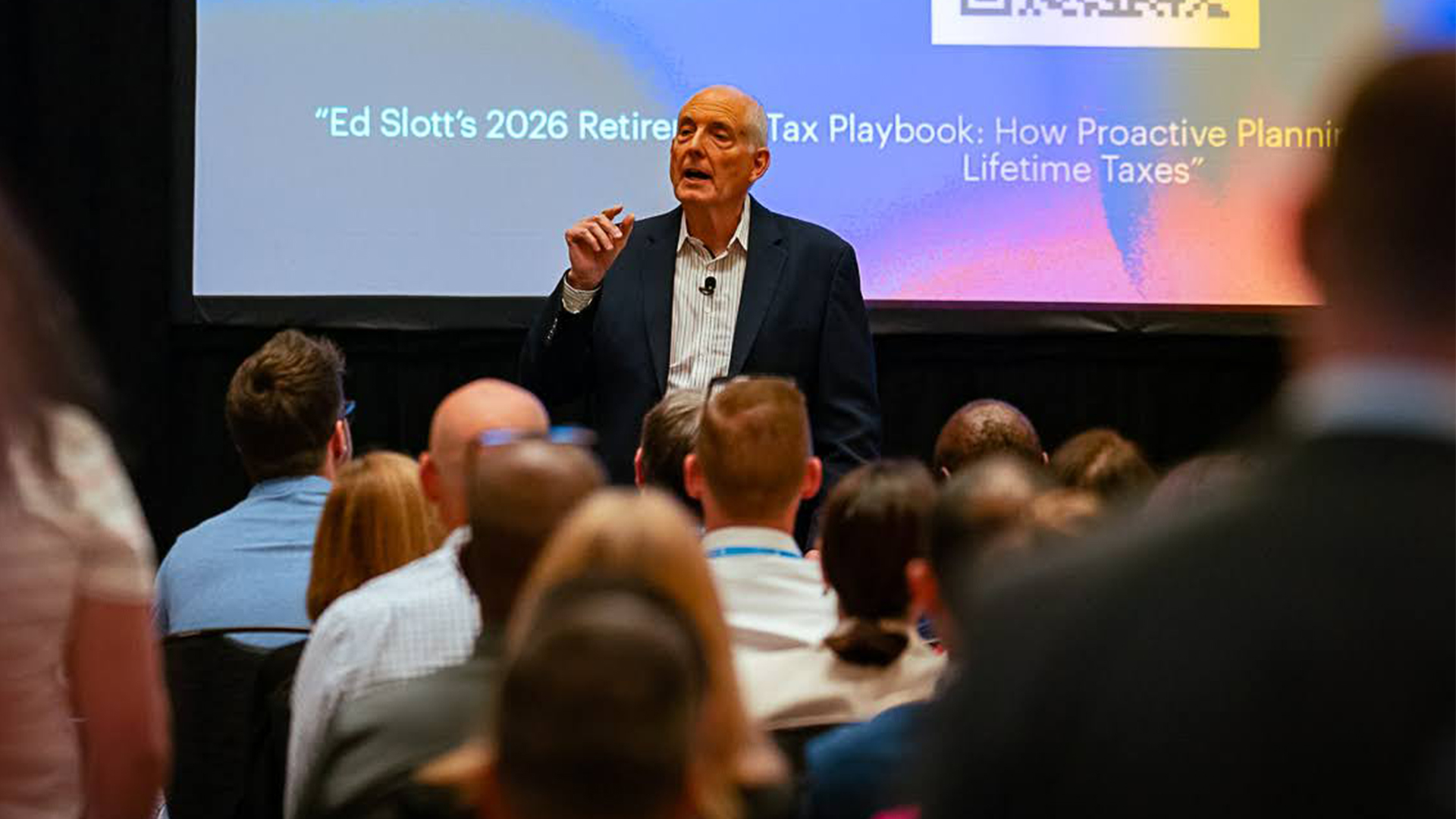
When I presented this topic at Horizons 2026, I shared an example with my audience. At one of my programs geared towards clients, we had a woman stand up in front of the whole group and say, “I like everything you said about Roth, but I’m 65 and I’m paying IRMAA surcharges. If I do what you say and convert to a Roth, my IRMAA surcharges increase. Is that right?” I told her that could indeed be the case. She responded by saying, “Well, if that happened, that would make me angry.” So, what did I tell her? I said, “If that would make you angry, then convert anyway. Because I’d rather you be angry for one year than be angry for the rest of your life.”
Whenever the woman in the story reached RMDs, she was going to be dealing with the very thing that made her angry for the remainder of her life. That’s why tax planning requires looking at the big picture.
How Advisors Can Help Clients Pay Less in Taxes
Another related concept that’s key to tax planning is figuring out how to fill out the lowest tax brackets. That’s why I often suggest Roth conversions, because they can be used to fill out the lower brackets.
Regular IRAs are growing, building, and compounding debts to the IRS. By converting to Roth, clients can pay the tax now and minimize the amount they owe later. It reminds me of a poster that hung up at my former dentist’s office. The sign read, “Ignore your teeth and they’ll go away.” This concept can be applied to IRAs as well. As paradoxical as it may seem, IRAs are an asset that grows and erodes simultaneously. The more it grows, the more clients will owe. That’s why I always remind clients that not all of the money in their IRA belongs to them. An IRA is a joint account with Uncle Sam, and he is not a pleasant person to share an account with.
How Specialization Tax Planning Can Help Advisors
To bring the conversation full circle, I want to revisit the topic of specialization. Many good accountants can make these mistakes. It requires training and a strong understanding of tax principals to apply these rules in all situations. If you do train them though, you can build better lives for your clients and help them achieve more over the course of their lives.
More on Retirement and Tax Planning
- Check out Ed Slott and Company’s IRA Success Program
- Watch our podcast on the secrets of retirement spending
- Learn how to permanently lower lifetime taxes from Ed Slott
Related Posts